
How Waste Heat Recovery Systems Boost Energy Efficiency in Industries
In today’s highly competitive industrial landscape, energy efficiency is no longer just a buzzword—it
is a critical driver of profitability and sustainability. Heavy industries such as steel, cement, sugar,
paper, and chemical manufacturing consume massive amounts of fuel. Unfortunately, a significant
portion of the thermal energy generated in these processes is lost to the environment as exhaust
gases.
This is where Waste Heat Recovery (WHR) systems come into play. By capturing and repurposing
this lost thermal energy, industries can drastically reduce their fuel consumption, lower operational
costs, and minimize their carbon footprint.
But how exactly do these systems work, and what role does advanced machinery play in maximizing
their efficiency? Let’s dive into the technical mechanics of WHR systems and how they are
transforming industrial power generation.
The Mechanics of Waste Heat Recovery
At its core, a Waste Heat Recovery system captures the thermal energy from high-temperature
exhaust gases that would otherwise be vented into the atmosphere. The process generally follows
these technical steps:
1. Heat Capture: High-temperature exhaust gases from kilns, furnaces, or engines are directed
into a Heat Recovery Steam Generator (HRSG) or an exhaust gas boiler.
2. Steam Generation: The thermal energy from the exhaust gas is transferred to water
circulating within the boiler, converting it into high-pressure, high-temperature steam.
3. Power Conversion: This high-pressure steam is then routed into a steam turbine. As the
steam expands across the turbine blades, it converts thermal energy into mechanical
rotational energy.
which produces electricity that can be fed back into the plant's grid (Captive Power Plant) or
exported.
How WHR Systems Boost Industrial Efficiency
Implementing a WHR system offers transformative benefits for industrial facilities:
• Maximized Fuel Utilization: By generating secondary power without burning additional
fossil fuels, plants can improve their overall thermal efficiency by up to 20-30%.
• Significant Cost Savings: Generating captive power from waste heat drastically reduces
reliance on grid electricity, insulating the plant from fluctuating energy prices.
• Emissions Reduction: Because no additional fuel is combusted to generate this extra power,
the plant's overall greenhouse gas emissions per unit of output are significantly lowered.
• Process Heating: Through the use of specific turbine configurations, low-pressure steam can
be extracted mid-process and used for other heating requirements within the plant (co-
generation).
The Heart of the System: High-Performance Steam Turbines
The overall efficiency of a Waste Heat Recovery system relies heavily on the quality and engineering
of the steam turbine used to convert the steam into mechanical power. To achieve maximum energy
conversion, industries require robust, precision-engineered turbines capable of withstanding high
temperatures, pressures, and continuous operation.
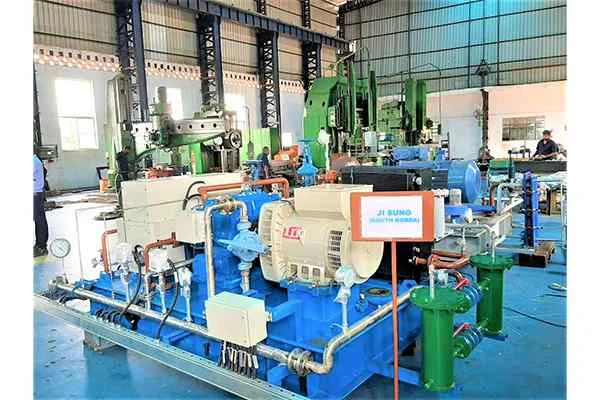
This is where CTMI excels. Recognized as one of the leading steam turbine manufacturers, CTMI specializes in designing and manufacturing high-efficiency energy conversion systems tailored for industrial power plants.
Why Industries Rely on CTMI for WHR
For over two decades, CTMI has been at the forefront of industrial power generation, supplying
customized, durable, and reliable steam turbines to over 37 countries. When it comes to Waste Heat
Recovery, CTMI offers a range of specialized solutions:
• Versatile Capacity Range: CTMI manufactures powerful steam turbines with capacities
ranging from 5 kW up to 60 MW, making them ideal for a wide variety of industrial scales,
from biomass and municipal solid waste plants to large-scale steel and cement factories.
• Multistage Steam Turbines: To extract the maximum possible energy from the steam,
CTMI’s multistage steam Turbines operate in sequential stages, allowing power generation
efficiency to reach up to 90%.
• Condensing Turbines: CTMI’s single and multi-stage condensing turbines take high-pressure
steam, expand it efficiently through precision-engineered nozzles and blades, and exhaust it
to a condenser at sub-atmospheric pressure, maximizing power output.
• Extraction Condensing Turbines: For industries that require both electricity and process
steam (co-generation), CTMI provides extraction condensing turbines. These allow a
constant pressure steam flow to be extracted mid-process for plant heating needs while the
rest continues to generate power.
• Robust and Durable Design: Built with standard, high-grade materials, CTMI steam
turbines are engineered to withstand extreme temperatures, high pressure, and heavy
vibrations, ensuring a long lifecycle and minimal maintenance downtime.
Conclusion
As industries face stricter environmental regulations and rising energy costs, Waste Heat Recovery
systems have transitioned from an optional upgrade to an industrial necessity. By capturing lost heat
and converting it into usable electricity, plants can achieve unprecedented levels of energy
efficiency.
However, the success of a WHR project hinges on the reliability of its core components. By
partnering with trusted experts like CTMI, industries can leverage world-class waste heat recovery
steam turbines to ensure their energy conversion is as efficient, reliable, and profitable as possible.